
Amazon Pallets: How to Buy and Resell Them for Profit

Updated: Sep 8
Amazon pallets are bulk lots of returned, overstock, or liquidated merchandise sold at a steep discount, usually through official liquidation channels or reputable wholesale marketplaces. Resellers buy them to source cheap inventory and resell individual items for a profit.
Margins depend heavily on whether the pallet is manifested, the condition of the goods, and the price you pay, and the risks are real.
Buying Amazon pallets can be a genuine sourcing strategy or an expensive lesson, depending on how well you understand what you're buying. This guide covers what Amazon pallets are, where to buy them safely, the difference between manifested and unmanifested lots, and an honest look at the risks.
What Amazon pallets are
Amazon pallets are bulk quantities of merchandise that Amazon needs to clear: customer returns, overstock, shelf-pulls, and liquidated inventory. Rather than process these items individually, Amazon and its liquidation partners sell them in bulk by the pallet or lot at a fraction of retail value.
Most of what fills a return pallet is exactly that, returned goods. Some items are unused, some are opened, and some are damaged, which is the central reality that shapes everything about whether a pallet is worth buying.

Where to buy Amazon pallets safely
The channel you buy through matters more than almost anything else, because it determines whether you're getting legitimate inventory or an overhyped mystery box.
Amazon liquidates a large share of its inventory through official B2B liquidation auction marketplaces, which is the most direct and verifiable route. Reputable third-party liquidation wholesalers also buy from Amazon and resell to smaller resellers.
What you want to avoid are the cheap social-media offers promising guaranteed high-value goods for a flat fee, which are frequently scams or the lowest-grade unsold lots.
Buying from established, verifiable sources with a track record reduces the single biggest risk in this business, which is paying real money for goods worth far less than advertised.
Manifested vs unmanifested pallets
This distinction is the core skill in buying pallets well.
A manifested pallet comes with a list of the items included, often with quantities and estimated retail values. You know roughly what you're buying, which lets you calculate whether the price makes sense before you commit. An unmanifested pallet is sold blind. It's cheaper for a reason, since you're accepting the risk of not knowing the contents or condition until it arrives.
For anyone starting out, manifested pallets are far safer. Unmanifested lots can carry better margins, but they reward experience and volume, where the occasional bad pallet averages out against good ones.

The real risks of buying Amazon pallets
The honest picture matters here, because pallets are sold on the promise of profit and the risk gets downplayed.
Returned goods carry condition risk: items may be damaged, incomplete, or untested, and electronics in particular can be expensive surprises. Unmanifested lots carry contents risk, where the pallet simply isn't worth what you paid.
There's also resale effort, since turning a pallet into profit means testing, cleaning, photographing, listing, and shipping dozens of individual items, which is real labor that eats into the margin. And returns don't come with warranties, so a dead unit is a loss, not a refund.
None of this makes pallets a bad strategy. It makes them a strategy that rewards buying from good sources, favoring manifested lots until you have experience, and pricing in the labor honestly. Returned inventory is also where restocking fees enter the picture, part of the same returns economy that fills these pallets in the first place.
How resellers turn pallets into margin
The resellers who make this work treat it as a repeatable process, not a gamble. They buy manifested lots from trusted sources, calculate expected recovery against the pallet price before bidding, and have a clear resale channel for the goods, whether that's their own marketplace listings or local resale.
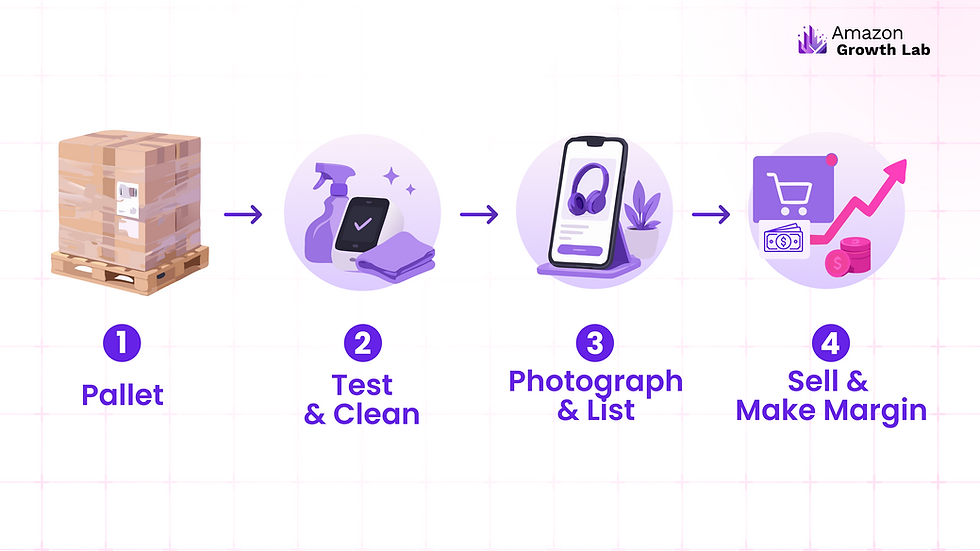
The math only works when you know your numbers going in. Understanding the broader returns and liquidation ecosystem helps, including where unclaimed and returned Amazon inventory actually goes, so you can source from the legitimate end of it rather than the mystery-box end.
The bottom line
Amazon pallets can be a real sourcing strategy when you buy from official liquidation channels or reputable wholesalers, favor manifested lots so you know what you're getting, and price in the condition risk and resale labor honestly. Bought carelessly on a mystery-box promise, they're a fast way to lose money. The difference is entirely in the sourcing and the diligence.

On-page FAQ section
What are Amazon pallets?
Amazon pallets are bulk lots of returned, overstock, or liquidated merchandise that Amazon sells at a steep discount through liquidation channels. Resellers buy them to source cheap inventory and resell individual items for a profit. Most of the contents are customer returns in varying condition.
Where can you buy Amazon liquidation pallets?
The safest sources are official Amazon B2B liquidation auction marketplaces and reputable third-party liquidation wholesalers with a verifiable track record. Avoid cheap social-media mystery-box offers promising guaranteed high-value goods for a flat fee, which are frequently scams or the lowest-grade lots.
What is the difference between a manifested and unmanifested pallet?
A manifested pallet includes a list of items, often with quantities and estimated retail values, so you know roughly what you're buying. An unmanifested pallet is sold blind and is cheaper because you accept the risk of not knowing the contents or condition until it arrives.
Are Amazon pallets worth it for resellers?
They can be profitable when you buy from trusted sources, favor manifested lots, and price in the labor and condition risk. Margins depend on the pallet price, the condition of the goods, and your ability to resell efficiently. Returns and untested electronics carry the most risk.
Is buying Amazon return pallets risky?
Yes. The main risks are damaged or incomplete returned goods, unmanifested lots worth less than you paid, untested electronics with no warranty, and the real labor of reselling dozens of items. Buying from reputable sources and favoring manifested pallets reduces but does not eliminate the risk.


Comments